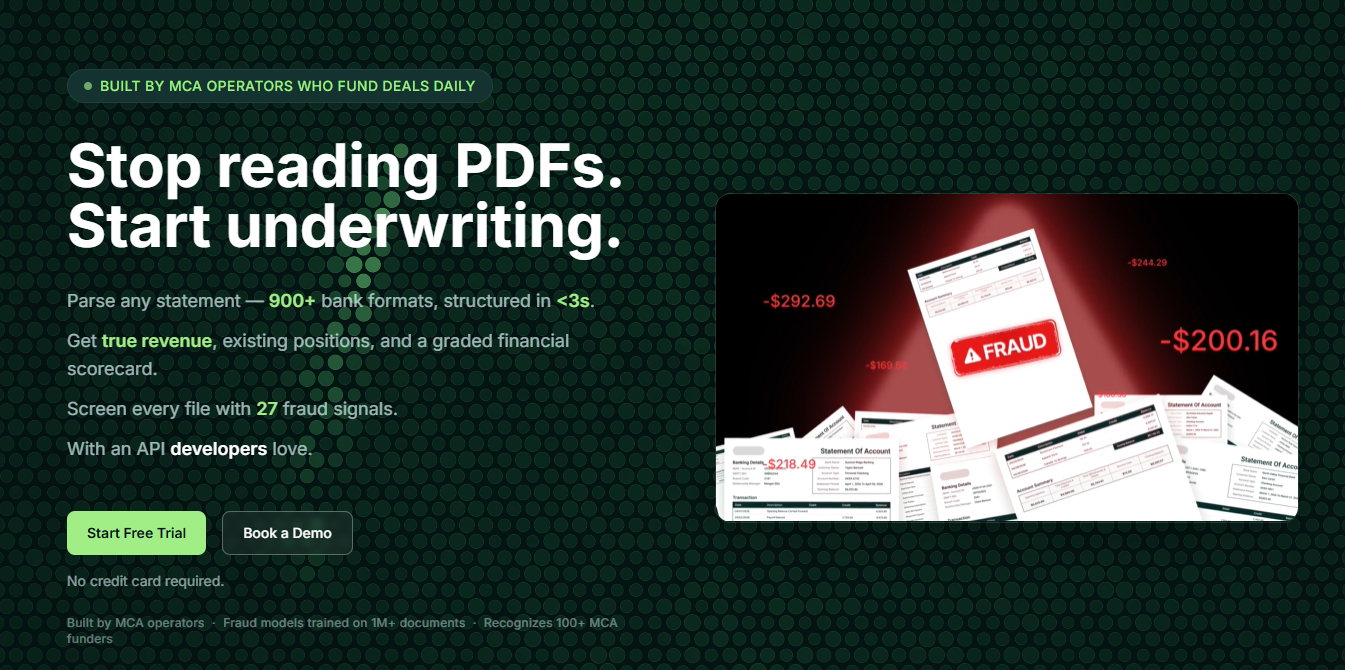
Build customer trust with verifiable identity signals
Trust is the foundation of every successful lending relationship, and it starts before a single offer is issued. When applicants submit documents, lenders need more than a visual review—they need consistent, standards-based validation of who the applicant claims to be. The result is a smoother onboarding experience that respects customers while protecting the business.
Quality matters because verification is not a one-time checkbox; it is a decision-support layer that influences approvals, limits, and risk outcomes. Strong verification combines document checks, data consistency checks, and fraud indicators into a cohesive workflow rather than scattered manual steps. That cohesive approach supports better underwriting decisions and reduces the burden on staff who otherwise chase discrepancies. For teams focused on trust, the goal is clear: verify quickly, explain outcomes consistently, and avoid unnecessary friction for legitimate customers.
Reduce manual review with fast, accurate document handling
Manual onboarding can be slow, inconsistent, and expensive, especially when volumes spike or when applicants provide incomplete or low-quality documents. That means teams can review exceptions with higher confidence instead of redoing routine steps. Faster document processing also helps reduce customer drop-off, since applicants experience less waiting and fewer “resubmit” requests.
Reliable verification depends on accuracy, not speed alone, so quality controls should be built into the workflow. Automated analysis can flag mismatches such as inconsistent personal details, suspicious document patterns, or signs of tampering, while still preserving human review where necessary. This balance supports governance requirements and helps ensure that exceptions are handled by qualified reviewers. When verification is handled with care and consistency, lenders strengthen trust both internally and with customers.
Support underwriting automation with better risk decisions
Once identity information is validated, the next challenge is turning that verified data into underwriting automation without losing context. Underwriting automation software benefits from clean inputs because risk models perform best when the identity baseline is reliable. When applicants are verified accurately, lenders can make decisions faster and apply risk rules more consistently across channels. That consistency is a key trust driver, because it reduces the “why was I denied?” confusion that comes from opaque or inconsistent review.
High-quality verification also supports better fraud detection because it improves the signal-to-noise ratio for downstream systems. When a lender can identify suspicious identity patterns early, it can route cases appropriately and limit exposure before deeper evaluation. This is especially valuable for high-volume onboarding where manual fraud review cannot scale linearly. The combination of verification and underwriting automation helps teams act decisively while maintaining fairness and auditability.
Conclusion
Trust and quality in onboarding are achieved when identity checks are reliable, repeatable, and integrated into the lending workflow. Streamlined verification reduces manual effort while improving the accuracy of identity inputs that drive risk decisions. ClearStaq supports that goal by combining AI-driven analysis with rapid document processing, helping lenders validate applicant information efficiently and reduce time-consuming checks. When verification is handled with strong quality controls, customers experience a faster, more respectful process and lenders gain confidence in every decision. For financial teams that want to scale without sacrificing safety, ClearStaq offers a practical path forward. By focusing on trustworthy identity signals and operational efficiency, businesses can strengthen both customer experience and fraud resilience. That alignment is what turns compliance into a competitive advantage.