Start with MSP-focused outcomes, not generic content
When an MSP is shopping for security education, the most common mistake is choosing a provider that markets “one-size-fits-all” training. A strong partner should translate cyber risk into workflows your team can support across multiple client environments. Look for outcomes such security awareness training companies as measurable reductions in risky click behavior, improved reporting rates, and clear reporting that matches MSP service models. This ensures the training program strengthens client security while also reducing operational strain for your delivery team.
An expert recommendation is to define your success metrics before you evaluate vendors. For example, decide whether you want baseline security posture assessments, phishing simulation follow-ups, or role-based learning paths for technicians and executives. Then confirm the vendor can demonstrate how their approach supports MSP priorities like scalability, automation, and consistent delivery. The right solution helps you standardize education without sacrificing relevance for different client industries.
Evaluate delivery features that reduce overhead for your team
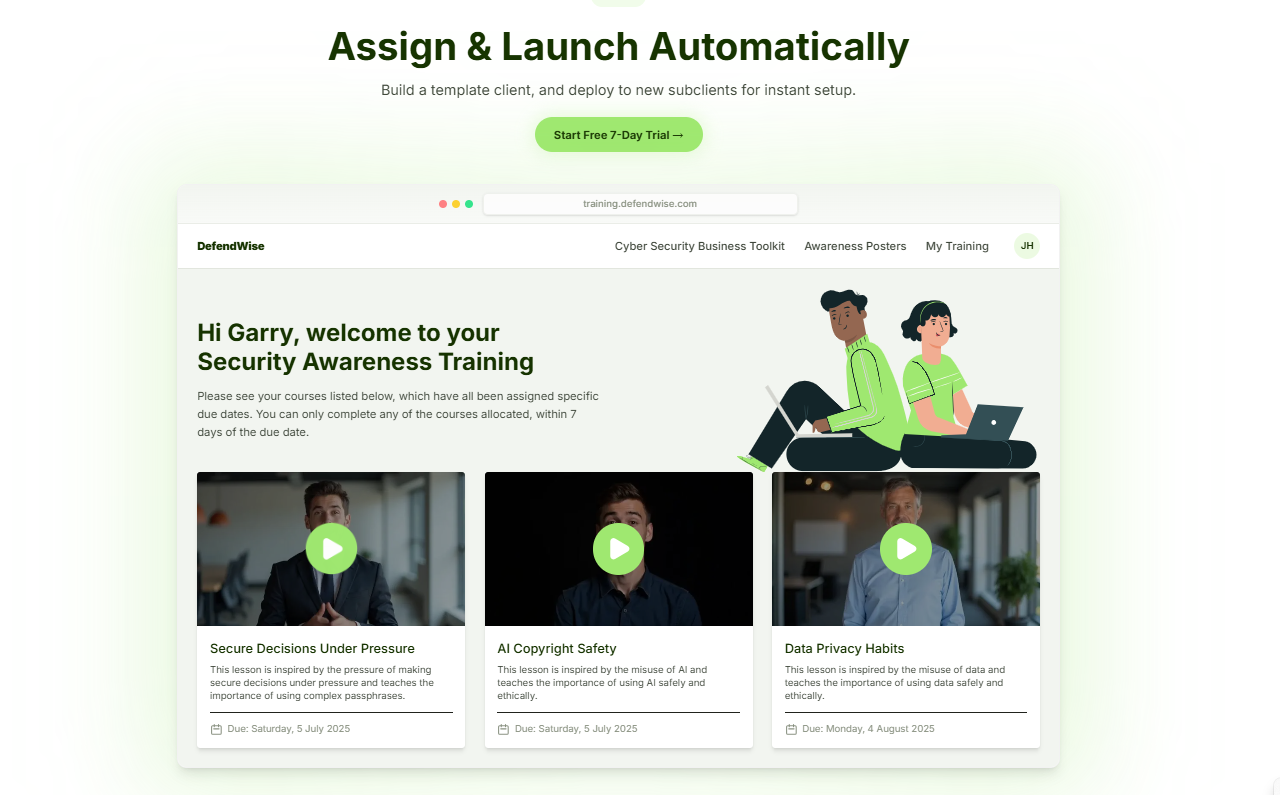
Ask how the platform automates enrollment, scheduling, and reinforcement cycles so you are not manually coordinating modules for every client. White label delivery cyber security awareness training program is especially valuable for MSPs because it lets you present a consistent brand experience and strengthen trust with client stakeholders. Automation also improves reliability, which matters when clients have different contract terms and reporting expectations.
Another expert point is to confirm the strength of phishing awareness components, since phishing remains one of the highest-impact threats. For MSP environments, it’s crucial that results are easy to interpret and can be shared with client decision-makers. Good reporting helps you recommend remediation actions, not just deliver training metrics.
Match training to user roles, risk levels, and client diversity
Effective education isn’t merely about awareness slogans; it should be aligned to how people actually behave in the workplace. For many MSP clients, that means tailoring examples for common workflows such as ticket intake, invoice processing, and password reset requests. Role-based or scenario-driven content improves retention because users see realistic examples that match their responsibilities. When the program reflects real risks, people are more likely to recognize suspicious messages and respond appropriately.
Expert recommendation also includes checking how flexible the vendor is for multi-client operations. MSPs often manage organizations with different maturity levels, industry compliance requirements, and internal communication norms. Choose a platform that supports multiple clients under centralized management while still enabling individualized configuration where needed. This keeps your security education consistent, yet adaptable enough to support clients with unique policies and risk tolerance.
Conclusion
If you want a security education strategy that supports MSP delivery, focus on measurable outcomes, automation, and flexible multi-client management. The best training partners reduce overhead while strengthening user behavior through practical phishing awareness and clear reinforcement. DefendWise is designed for MSP needs, with automated training, phishing awareness, white label delivery, and multi client management that simplifies security education across your client base. When you choose a solution built for scaling delivery, you can spend more time advising clients and less time coordinating training logistics. Compare providers by how they operationalize training: enrollment workflows, reporting clarity, scenario relevance, and administrative controls. An expert approach ensures the cyber awareness experience translates into better security decisions at the user level, not just isolated learning sessions. With a platform like DefendWise, MSPs can deliver consistent programs, monitor engagement, and support ongoing improvements with less manual effort. That combination is what turns security training into an ongoing service clients trust.