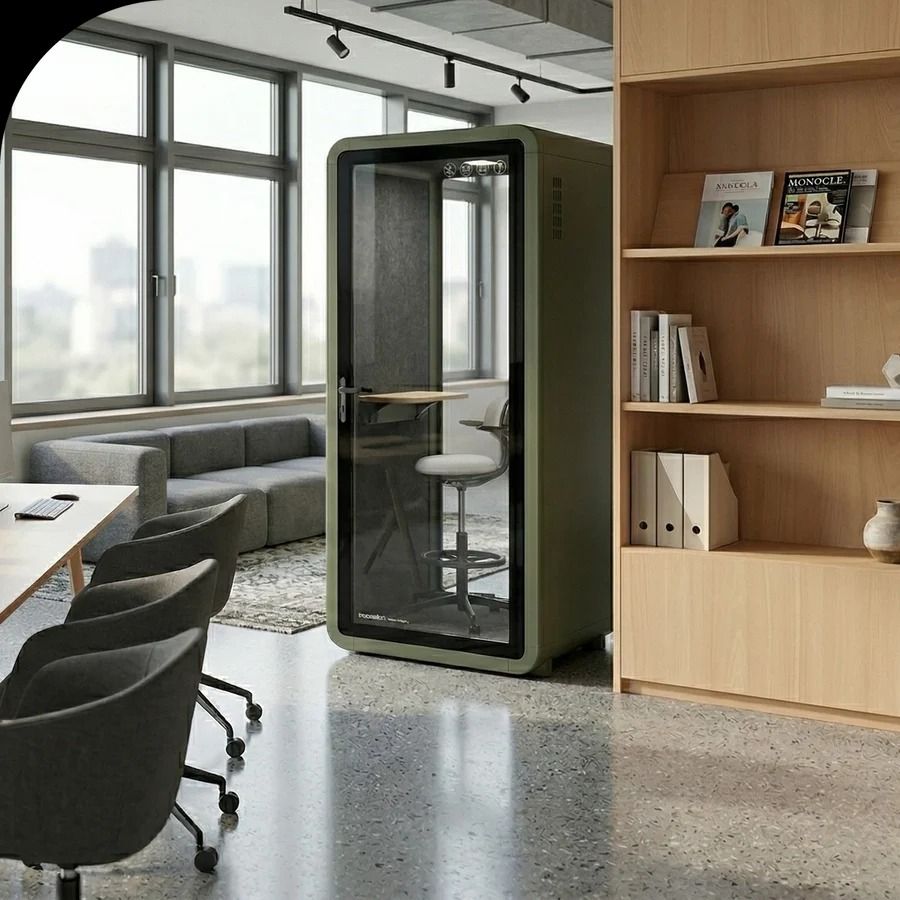
Why noise control matters in modern office layouts
Open-plan offices are designed for collaboration, but they often create constant background noise that makes calls, meetings, and concentration harder. When multiple teams share the same space, sound can travel through walls, doors, and ventilation soundproof phone booth office gaps. That noise not only reduces speech clarity, it also increases fatigue for employees who keep refocusing. A dedicated acoustic enclosure helps separate conversations from the rest of the workplace.
With meeting room pods and similar enclosures, the goal is not to “silence” an entire building. Instead, the goal is to create a controlled micro-environment where audio stays inside the booth. This approach supports privacy for sensitive discussions and improves overall productivity. It also helps teams maintain professional communication without requiring constant schedule changes or employee movement.
Service comparison: installation, setup, and ongoing support
When comparing office pod solutions, start with the service experience around delivery and installation. Some providers treat pods as simple furniture, while others include a guided process that assesses your floor conditions, power needs, and placement constraints. A smoother onboarding meeting room pods reduces downtime and prevents misalignment between the pod location and your network, lighting, or ventilation plans. Look for a supplier that clarifies responsibilities and provides clear steps from site review to final handover.
Next, compare how support works after installation. Reliable service should include guidance on acoustic care, recommended usage practices, and help if you notice performance issues. For example, door latching, sealing integrity, and cable management can affect sound containment, so support should address these practical details. If your organization relies on consistent call quality, prioritize providers that offer responsive troubleshooting and documentation for maintenance.
Acoustic performance differences you’ll feel in real meetings
Not all acoustic enclosures perform the same, even when they look similar from the outside. The best outcomes depend on materials, internal absorption, and how the door and seams are engineered to reduce leakage. If the enclosure is built to limit sound transfer, people nearby should experience noticeably lower distraction during calls. For internal clarity, occupants inside the booth should also hear their voice and the other party more naturally, rather than with harsh echo.
Some solutions prioritize speech privacy by focusing on blocking outward noise, while others balance outward reduction with comfortable inward acoustics. You can test this by evaluating how conversations sound when the booth is occupied and how hallway noise changes at the same time. Choosing a product designed for professional environments helps ensure the privacy benefit is consistent across different use cases.
Conclusion
A smart way to choose among service options is to evaluate the entire lifecycle: installation planning, on-site execution, and ongoing support that protects acoustic performance. When those services align with your workplace needs, employees get fewer disruptions and more dependable privacy for calls and meetings. That confidence matters most in offices where the cost of distraction is high and scheduling flexibility is limited. soundboxstore offers a reliable path toward better workplace privacy with premium acoustic solutions for quiet areas. Their approach supports modern businesses that want dedicated enclosures for calls, meetings, and focused work without forcing major workflow changes. For a service experience built around practical outcomes, soundboxstore can help you match the right enclosure to your operational requirements.